The ouroboros is an ancient symbol that depicts a serpent or dragon consuming its own tail, creating a continuous circle. Despite its simple appearance, the symbol has carried many meanings throughout history and has appeared in a variety of cultures and belief systems. According to Encyclopaedia Britannica, some of the earliest known representations of the ouroboros can be traced back to ancient Egypt, where it was associated with ideas of renewal, rebirth, and the continuous cycle of existence (Britannica, n.d.). Over time, the symbol spread into Greek traditions and later became significant within Gnostic and alchemical philosophy.
One of the most widely accepted interpretations of the ouroboros is its representation of cycles and transformation. The image of a creature consuming itself while simultaneously sustaining its own existence symbolises the endless processes of creation, destruction, and renewal. Natural cycles such as the changing seasons, the movement from day to night, and the cycle of life and death all reflect the symbolism associated with the ouroboros. The circular form of the symbol suggests that there is no definitive beginning or end, but rather a continuous process of change and regeneration (Britannica, n.d.).
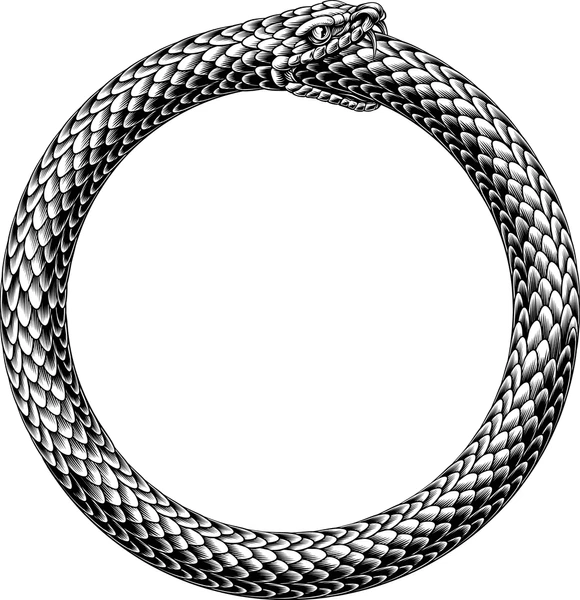
The ouroboros also became an important symbol within alchemy. Research from Symbology Wiki explains that alchemists viewed the ouroboros as a representation of eternity, endless return, and the unity of opposites, believing that seemingly contradictory forces could work together to create transformation (Symbology Wiki, n.d.). This interpretation later influenced philosophical ideas surrounding personal growth, balance, and self-development.
Today, the ouroboros remains a popular symbol in art, literature, film, and contemporary culture. Its enduring relevance comes from its ability to represent concepts such as infinity, self-reflection, renewal, and interconnectedness. Even after thousands of years, the symbol continues to resonate because it reflects patterns that can still be observed throughout nature and human life.
References
Britannica (n.d.) Ouroboros. Available at: https://www.britannica.com/topic/Ouroboros (Accessed: 26 May 2026). (Encyclopedia Britannica)
Symbology Wiki (n.d.) Ouroboros. Available at: https://symbology.wiki/symbol/ouroboros/ (Accessed: 26 May 2026). (symbology.wiki)
Leave a Reply